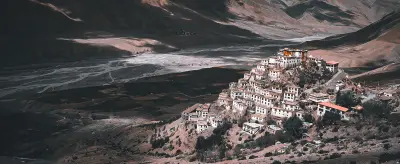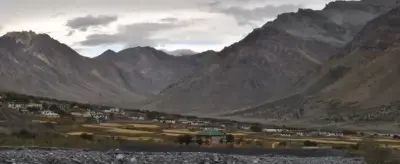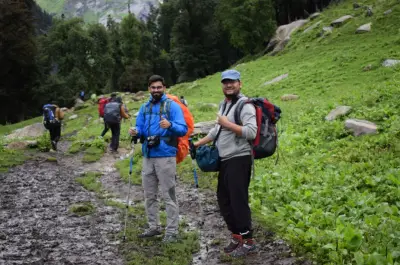



Trekking in the Himalayas is a life-changing adventure that offers more than just breathtaking landscapes; it is a profound connection with nature in its purest form. However, for a beginner, the sheer scale of these "towering giants" can be as intimidating as it is thrilling.
To ensure your first Himalayan experience is safe, sustainable, and unforgettable, we’ve compiled this comprehensive guide covering everything from trail selection to altitude safety and cultural ethics.
1. Finding Your Path: Decoding Himalayan Difficulty
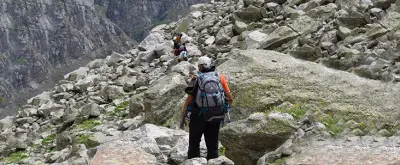
Not all trails are created equal. In the Himalayas, difficulty is determined by a combination of altitude gain, daily distance, and technicality of the terrain (e.g., forest paths vs. loose boulders).
The Easy Entry (Perfect for First-Timers)
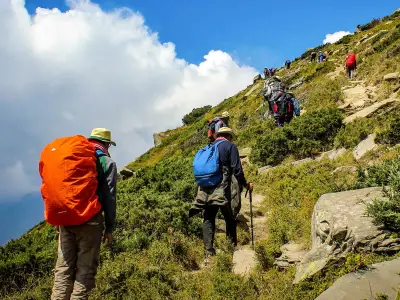
These treks typically stay below 12,000 ft and feature well-marked forest trails and moderate inclines. They are ideal for families or those testing their mountain legs for the first time.
Top Picks: Beas Kund, Kheerganga, and Nag Tibba.
The Moderate Challenge (For the Fit & Focused)
If you exercise regularly, these treks offer a rewarding "summit high." Expect steeper climbs, 6–8 hours of walking per day, and occasional snow crossings.
Top Picks: Hampta Pass, Bhrigu Lake, and the world-renowned Valley of Flowers.
The Strenuous Expedition (For the Seasoned Trekker)
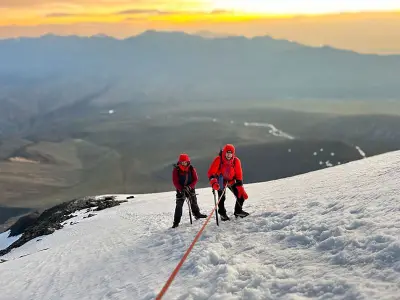
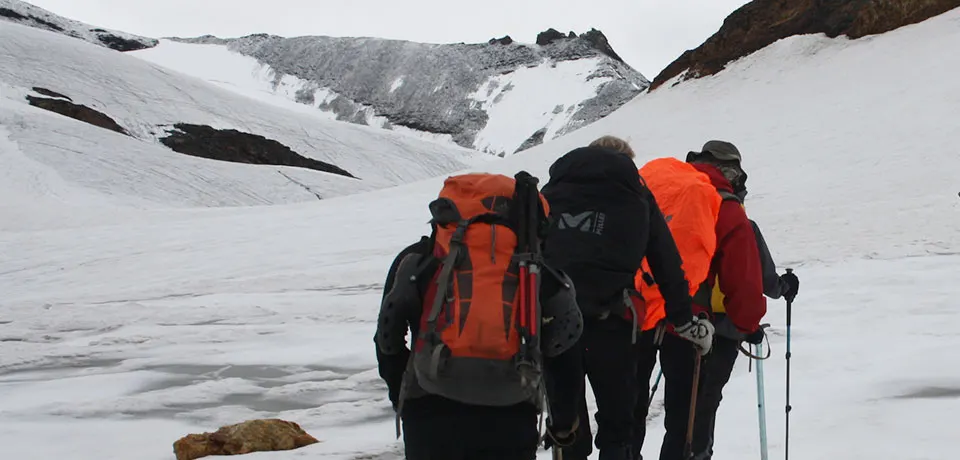
These are high-altitude adventures often crossing 16,000 ft. They require significant mental grit, previous trekking experience, and the ability to handle unpredictable weather.
Top Picks: Kang La Pass, Rupin Pass, and Goechala.
2. Physical Conditioning: The 8-Week Blueprint
Don't wait until you see the peaks to start training. High-altitude trekking requires functional strength and "lung endurance."
Cardio Base: Aim for 45 minutes of aerobic activity (running, swimming, or cycling) 4–5 times a week to improve oxygen processing.
Targeted Strength: Focus on your lower body and core. Squats, lunges, and step-ups are essential for handling steep descents.
The Backpack Simulation: Two weeks before your trip, start hiking local hills or stairs while wearing your loaded 40–60L backpack (aim for 5–7 kg). This conditions your shoulders and prevents "trail shock."
3. The Layering System: Essential Gear
In the mountains, "Weight is the enemy." The secret to staying warm without carrying a heavy trunk is the Three-Layer Principle:
Base Layer (Wicking): Polyester or Merino wool to pull sweat away from your skin. Avoid cotton—it stays wet and saps body heat.
Mid Layer (Insulation): A fleece or "puffer" jacket to trap heat.
Outer Layer (Shell): A waterproof and windproof jacket (Gore-Tex or similar) to protect against the elements.
Footwear: Invest in high-ankle trekking boots with deep "lugs" (treads). Mandatory Tip: Break them in with at least 15–20 miles of walking before the trek to avoid blisters.
4. Understanding Altitude & Safety
Acute Mountain Sickness (AMS) is the most common hurdle for beginners. It is not a reflection of fitness; it is a biological response to thinning air.
The Golden Rule: "Climb high, sleep low." Never increase your sleeping altitude by more than 300–500m per day once above 3,000m.
Hydration: Drink 4–5 liters of water daily. Dry mountain air and wind dehydrate you faster than you realize.
Listen to Your Body: Common symptoms include headache, nausea, and dizziness. If symptoms persist or worsen, the only "cure" is to descend immediately.
Safety Protocols: Never trek alone. In 2026, it is highly recommended to hire a certified local guide or join a reputable group for navigation and emergency support.
5. Environmental & Cultural Responsibility
The Himalayas are an ecologically fragile zone. As a trekker, you are a guest in both a natural sanctuary and a local's home.
Leave No Trace: Carry all non-biodegradable waste (wrappers, plastic bottles) back to the city.
Respect the Silence: Avoid loud music; it disturbs wildlife (like the elusive Snow Leopard) and ruins the serenity for others.
Cultural Sensitivity: Always walk clockwise around Stupas and Mani walls. Dress modestly when entering villages or monasteries, and always ask for permission before taking photos of local people.
FAQ: Quick Answers for Beginners
Q: When is the best time to trek? A: There are two main windows. Spring (April–June) for blooming rhododendrons and Autumn (September–November) for the clearest mountain views and stable weather.
Q: How long does it take to acclimatize? A: Usually 1–2 days of "buffer" time at a base camp (like Leh or Manali) is essential before heading to higher altitudes.
Q: What is the average budget? A: Depending on the duration and support (porters vs. self-carry), expect to spend between $500 and $2,000.
Final Thoughts
The Himalayas have a way of putting life into perspective. Whether you are walking through the lush meadows of Himachal or the high-altitude deserts of Ladakh, every step is a story. Prepare well, respect the mountain, and it will reward you with memories that last a lifetime.
Ready to start your journey?